
Introduction
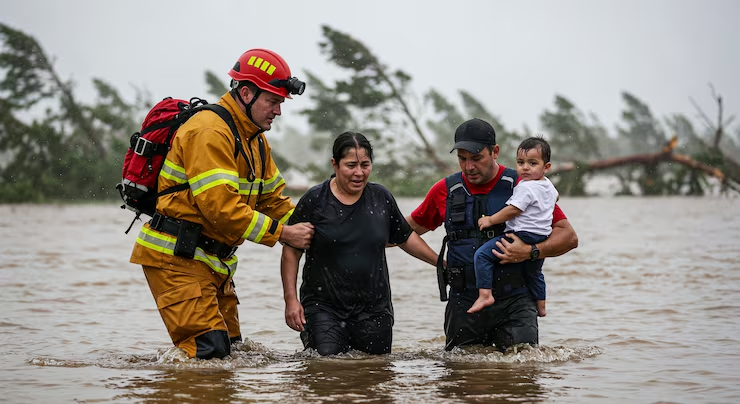
When disaster strikes, families face fear, uncertainty, and a sudden loss of stability. At that moment, immediate relief is not just support — it’s survival. Our emergency response program works around the clock to reach people who have lost homes, food, medicine, or safe shelter.
How Our Emergency Response Begins
The first step is rapid assessment. Our ground volunteers gather information from:
-
distressed families
-
community leaders
-
local emergency groups
-
direct field visits
This allows us to understand which villages, streets, or families need help first.
What We Carry During Emergency Relief
Every relief distribution includes essential items that help families survive for at least 7–10 days:
-
atta, rice, dal
-
cooking oil, salt, sugar
-
ready-to-eat snacks
-
blankets and warm clothing
-
hygiene essentials
-
first-aid and basic medicines
During floods or natural disasters, we also carry:
-
clean water packets
-
disinfectants
-
mosquito repellents
-
waterproof sheets
Reaching the Unreachable
In many cases, the most affected families live in areas where:
✔ roads are broken
✔ water has entered homes
✔ electricity is cut
✔ shops are closed
✔ no transport is available
Our volunteers travel through narrow lanes, tractors, boats, and temporary bridges to reach these families.
Real Story From the Ground
During the recent flood, our team met a mother with two children stranded on the second floor of their damaged home. They had no food for two days. When our volunteers gave them ration kits and warm blankets, she cried and said:
“You came when nobody else could reach us. This is more than food — it’s hope.”
Why Immediate Relief Matters
Emergency assistance prevents:
-
hunger
-
dehydration
-
disease outbreaks
-
emotional breakdown
-
long-term damage
And most importantly, it gives families the courage to survive the worst days.
Conclusion
Emergency relief is more than supplies — it’s a lifeline. Every donation you make gives families the strength to stand again.
No Comments